This is the question everyone considering Dubai is asking right now - and they deserve a straight answer, not marketing copy.
The short version: Dubai is functioning normally. The ceasefire has held since April 8, UAE airspace fully reopened on May 2, Emirates is operating 96% of its global network, and daily life - from schools to malls to restaurants - has returned to its pre-conflict rhythm. But the situation isn't over. The Strait of Hormuz remains partially disrupted, a peace deal is still being finalized, and today's Dubai is operating in a different security context than the one that existed before February 28.
Here's what you need to know as of late June 2026.
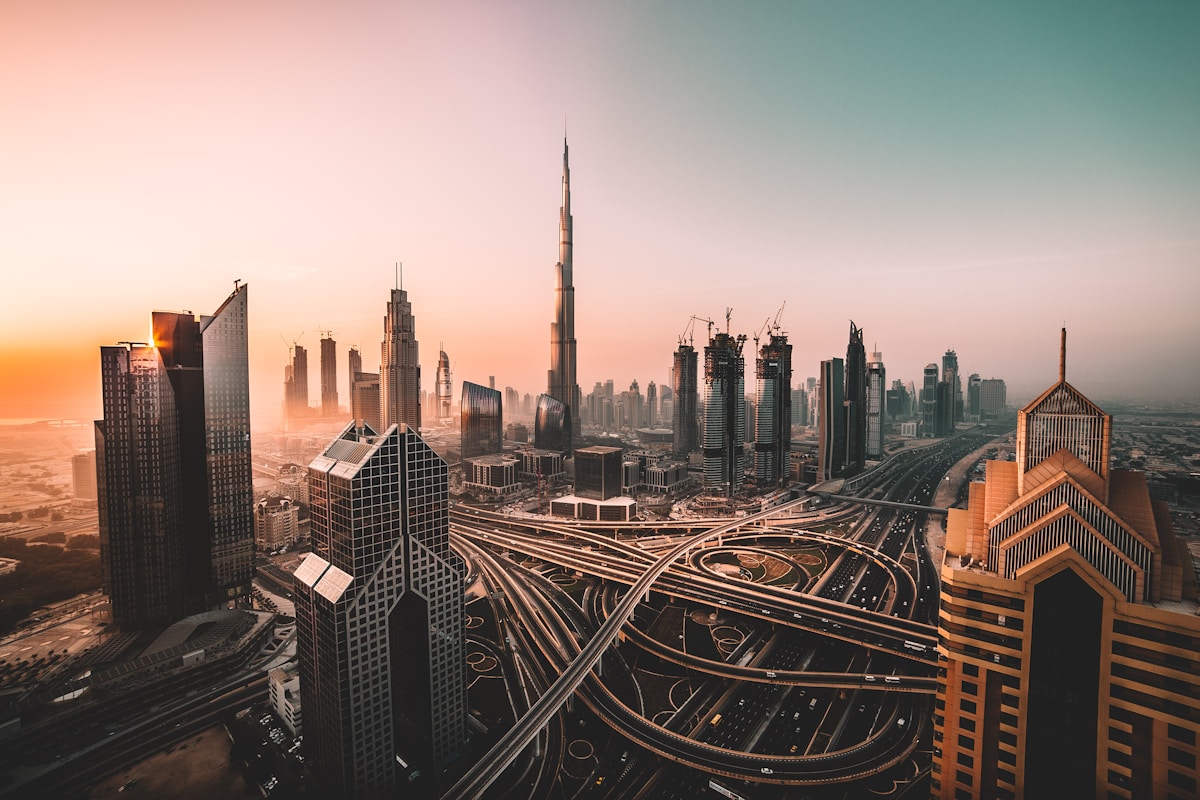
What Happened: A Quick Summary
On February 28, 2026, Iran launched retaliatory strikes against the UAE and other Gulf states after the US and Israel struck Iranian military targets. Over the course of five weeks of active conflict (February 28 – April 8), Iran fired a total of 549 ballistic missiles, 29 cruise missiles, and over 2,260 drones at the UAE.
The UAE's air defence systems intercepted the vast majority - a rate consistently above 90%. But debris from interceptions and the sheer volume of projectiles caused real damage: disruption at Dubai International Airport, fires near landmark buildings, damage to data centres and port facilities, and tragically, several civilian deaths (primarily foreign nationals hit by debris).
On April 8, a ceasefire brokered by Pakistan took effect. It was extended indefinitely on April 21 by President Trump. There was a brief flare-up on May 4 when Iran launched a smaller attack on the UAE (12 ballistic missiles, 3 cruise missiles, 4 drones - most intercepted). Since then, the situation has been largely stable.
On June 17, the US and Iran signed a memorandum of understanding to formally end the war within 60 days. Negotiations continue on the Strait of Hormuz, Iran's nuclear programme, and sanctions.
What's Happening on the Ground Right Now
Daily life is normal. Malls, restaurants, gyms, beaches, and offices are all operating as usual. Schools completed the academic year. The FIFA World Cup 2026 (happening in the US, Canada, and Mexico) is filling sports bars and fan zones across the city.
Dubai International Airport (DXB) is open and operating. UAE airspace was fully reopened on May 2, 2026, with the General Civil Aviation Authority confirming "normal status" across all operations. Emirates is serving 138 destinations across 73 countries - 96% of its pre-conflict network. The airline is restoring A380 services on 11 international routes between late June and August. Etihad is operating around 80 destinations from Abu Dhabi.
That said, capacity hasn't fully recovered. Emirates is operating at roughly 80% of pre-war departure levels - about 200 daily departures versus 237 this time last year. Several European carriers (Swiss, KLM, Cathay Pacific) still have reduced Gulf services. Flights exist and are reliable, but frequencies on some routes remain lower and fares are higher than pre-conflict levels.
Government services are running normally. Visa processing, Emirates ID applications, GDRFA services, MOHRE, DLD transactions - all operational. The Dubai Land Department recorded AED 252 billion in Q1 2026 property transactions, a 31% year-on-year increase, with 29,312 new investors entering the market.
The Security Picture: Honest Assessment
The UAE proved it can defend itself. The air defence performance - intercepting over 90% of nearly 3,000 incoming projectiles - was genuinely impressive and exceeded most expectations. The UAE's THAAD, Patriot, and other systems performed under real combat conditions at a scale few countries have faced.
But let's be honest about what changed:
The "safe haven" assumption is different now. Before February 28, the working assumption for most expats and investors was that Dubai would never be directly targeted. That assumption was shattered. Even though the defences worked, the experience of hearing sirens, receiving missile alerts, and seeing smoke near landmarks fundamentally changed the calculus for some people.
An estimated 40,000+ expats left during the conflict. Corporate evacuations, family departures, and individual decisions to leave created the largest peacetime expat exodus in the UAE's history. Many have since returned. Some haven't. The expat community is measurably smaller than it was in February, though exact numbers are difficult to pin down.
The Strait of Hormuz remains partially disrupted. While the June 17 memorandum calls for reopening, commercial shipping through the strait has not fully normalized. This affects supply chains, shipping costs, and the broader regional economy. As recently as June 26, Iran attacked a cargo ship with a drone in the strait, and Trump called it a "foolish violation" of the ceasefire.
There was a false missile alert on June 27. Dubai residents received an incoming missile warning from the Ministry of Interior that was retracted minutes later as a technical malfunction. Authorities said to "disregard" the alert. While it was a false alarm, it's a reminder that the security infrastructure remains in an elevated state.
What Expats Who Stayed Are Saying
The experience of the conflict created two very different groups of expats. Those who left - often families with young children, people whose employers offered evacuation packages, or those with easy access to alternative bases - tend to view the situation through the lens of the worst days in March.
Those who stayed - and this is the majority of long-term residents - generally describe the experience as intense but manageable. The community rallied. The leadership's response built trust. And for many, the speed at which normal life resumed validated their decision.
The corporate relocation picture tells a balanced story. According to Fragomen (a global immigration services firm with a Dubai office), the movements they're seeing "remain broadly within expected attrition and mobility patterns." What's changed is that companies now demand relocation plans that include contingency and emergency support - something that wasn't standard before. The appeal of Dubai as a destination hasn't disappeared; it's just acquired a new layer of risk assessment.
What This Means If You're Considering Moving to Dubai
If you're relocating for work with a specific job offer: The practical fundamentals haven't changed. Zero income tax, competitive salaries, high quality of life, world-class infrastructure - all still true. Your employer should have an emergency protocol in place (ask about this during negotiations - it's now a normal question). Flights are operating. Visas are processing. The economy is functioning.
If you're a freelancer or remote worker considering Dubai: The lifestyle proposition remains strong, and costs may actually be more favorable right now. Some landlords are offering better deals than they were 6 months ago. Short-term rentals have more availability. The Golden Visa and freelance visa systems are fully operational. The key question is your personal risk tolerance for living 150 miles from Iran during an unresolved (though paused) conflict.
If you have a family with young children: This is where the most careful consideration is warranted. Most schools completed the year normally, and enrollment for September 2026 is proceeding. But the experience of missile alerts - however infrequent - is something to weigh honestly. Many families stayed and are continuing their lives. Some left for good. Talk to other expat parents currently in Dubai for the most grounded perspective.
If you're considering buying property: Dubai removed the AED 750,000 minimum property value for investor visas in May 2026, making entry easier than ever. Q1 2026 transactions were up 31% year-on-year. The market didn't crash - it paused briefly and resumed. Some mid-market negotiations are yielding 3–7% below pre-conflict prices. Whether that represents an opportunity or a warning sign depends on your time horizon and risk appetite.
The Practical Checklist for Arriving in Dubai Now
If you've decided to move or are already committed, here's what's different about relocating in mid-2026 versus a year ago:
- Flights: Book with Emirates, Etihad, or flydubai for the most reliable service. Some European carriers are still at reduced frequencies. Book flexible tickets where possible. Travel insurance that covers conflict-related disruption is worth the premium - not all policies include it, so read the fine print.
- Shipping belongings: The Strait of Hormuz disruption has affected container shipping. Some shipments are being rerouted via the Gulf of Oman, Arabian Sea, and Red Sea - adding time and cost. If shipping from Europe or Asia, expect longer timelines than normal and confirm routing with your freight forwarder.
- New regulations to know about: Private sector salaries must now be paid by the first day of each month (WPS enforcement tightened June 1). Cash payments at parking meters have been phased out. The legal age of adulthood dropped from 21 to 18. Six new countries got visa-on-arrival access (Indonesia, Vietnam, Thailand, Philippines, Kenya, South Africa).
- Emergency preparedness: This is now a standard part of life in the UAE. Download the UAE's emergency alert apps. Know your building's shelter procedures. Keep your passport and key documents accessible. Have an emergency exit plan (even if you never use it). This isn't fearmongering - it's what every government in the region now recommends.
The Bottom Line
Dubai in June 2026 is safe for daily life. The ceasefire is holding. A formal peace agreement is being negotiated. Flights are back. The economy is functioning. The government has demonstrated both military capability and institutional resilience.
But "safe" now comes with an asterisk it didn't have before. The region's security environment has permanently shifted. The Strait of Hormuz remains a flashpoint. The peace deal isn't final. And the assumption that Dubai exists in an invulnerable bubble - which was always somewhat fictional - has been tested in a way that can't be un-tested.
For most people, the honest assessment is: Dubai remains one of the best cities in the world to live and work in. The reasons people chose it - tax-free income, infrastructure, lifestyle, opportunity - are all still true. What's new is that you're now making that choice with eyes open about regional risk, rather than assuming it away. And for many, that's a perfectly reasonable trade-off.
Last updated: June 27, 2026. The situation in the region remains fluid. Check your government's current travel advisory for the UAE before making travel plans. This article is for informational purposes and does not constitute professional advice.
Sources: Britannica, Al Jazeera, CNBC, Gulf News, Khaleej Times, Wego Travel, Euronews, Fox News, UAE General Civil Aviation Authority, UAE Ministry of Defence, Wikipedia, Newland Chase, AGBI, Time Out Dubai


